

Kendra Dawn Young Thompson(Aka) Kendra Dawn Young Thompson
M.Ed. Reading Specialist
Liberty University
 Liberty University
326 Buffalo Branch Lane
Swoope, VA 24479
 326 Buffalo Branch Lane
5402802595
 5402802595

Teaching Philosophy
Learning is shaped by the views of the leader and the teacher. A biblical worldview and Christian philosophy of education provide the foundation for guiding students in truth, purpose, and moral responsibility. These perspectives draw on Scripture to offer understanding and influence teachers in their roles. This essay will discuss the principles of Christian philosophy of education and biblical worldview, highlighting how they manifest in effective educational practices.
A worldview is the framework through which people understand reality, make decisions, and express their faith. The biblical worldview relies on the authority of Scripture and recognizes God as the Creator, Sustainer, and Redeemer of everything. Truth is seen as objective and rooted in God's character in the Bible (John 14:6). Humans are made in God's image (Genesis 1:27), giving each person inherent value. While sin has distorted creation, redemption comes through Jesus Christ (Romans 3:23-24). This worldview asserts God's power in all aspects of life, from education to business and relationships. It emphasizes that truth is not relative but revealed in Scripture and the life of Jesus. Proverbs 9:10 states, "The fear of the Lord is the beginning of wisdom," meaning that true wisdom starts with reverence for God. Thus, a biblical worldview influences how one perceives knowledge, humanity, ethics, and life's purpose.
A Christian philosophy of education applies the biblical worldview to teaching and learning. This philosophy views people as spiritual and physical beings created for an eternal purpose. Education involves more than just sharing information; it focuses on character development and realizing each student's potential. This perspective assumes life has a divine purpose and that education helps students fulfill God's plan for them (Ephesians 2:10). The teacher's role is to support not only the mental but also the spiritual and moral growth of students. Values are not shaped by culture; rather, they stem from God's unchanging nature. Concepts like justice, honesty, compassion, and humility form the foundation of education. As Blackaby and Blackaby (2011) state, "Spiritual leadership moves people on to God's agenda" (p. 20). Therefore, education should aim to align students with divine purpose. Christian teachers must model these values, cultivate virtues, and encourage students to act responsibly and serve others.
We should recognize students as unique creations of God. This belief leads to student-centered, compassionate practices. Teaching and curriculum development must include truth, integrity, and purpose. Academic disciplines reflect the order and design of the Creator. In subjects like science, literature, or mathematics, Christian educators reveal the structure and intention of creation, fostering awe, wonder, and moral insight. Discipline should focus on guidance—helping students learn self-regulation, accountability, and respect. Assessments should not only evaluate academic performance but also support character growth and service. For administrators or instructional coaches, the goal is to establish a culture of servant leadership and spiritual integrity. According to Northouse (2023), effective leadership is based on trust and ethics. Christian school leaders must create environments characterized by justice, teamwork, and vision rooted in biblical values. As Blackaby and Blackaby (2011) point out, leaders should seek God's guidance in all decisions and exhibit spiritual maturity to their communities. As a reading instructor, this means meeting every student where they are academically and emotionally, acknowledging their inherent worth. Teaching is a ministry that shares not only knowledge but also dignity, hope, and encouragement grounded in Christ.
A Christian worldview and biblical philosophy of life provide a firm foundation for teaching and leadership. These viewpoints affirm that all truth is God's truth, that every person has eternal value, and that learning is a moral and spiritual journey. Whether planning curriculum, managing classroom behavior, fostering student relationships, or leading a school, Christian educators are called to reflect God's character in all aspects. In a world where everything seems relative, maintaining biblical principles ensures that education is a transformative, redemptive, and God-honoring endeavor.
References:
Blackaby, H., & Blackaby, R. (2011). Spiritual leadership: Moving people on to God’s agenda (Rev. ed.). B&H Publishing Group.
Northouse, P. G. (2023). Introduction to leadership: Concepts and practice (6th ed.). SAGE Publications, Inc. https://mbsdirect.vitalsource.com/books/9781071884959
Pazmiño, R. W. (2008). Foundational issues in Christian education: An introduction in evangelical perspective (3rd ed.). Baker Academic.
Van Brummelen, H. (2009). Walking with God in the classroom: Christian approaches to teaching and learning (3rd ed.). Purposeful Design Publications.
Resume & CV
Professional Summary
Dedicated and student-centered educator with 13 years of classroom teaching experience spanning kindergarten through sixth grade. Trained in Responsive Classroom, Orton-Gillingham, and VALLS methodologies, with a strong foundation in evidence-based literacy and language instruction. Experienced team leader and professional development presenter committed to preparing future teachers to create inclusive, engaging, and data-driven learning environments. Skilled in mentoring pre-service teachers, supporting diverse learners, and building collaborative partnerships among families, schools, and communities.
Education
Liberty University – Lynchburg, VA
Master of Education (M.Ed.), Reading Specialist Endorsement – In Progress
(Expected Completion: Spring 2026)
Mary Baldwin College – Staunton, VA
Bachelor of Arts in Education, Teaching License (PK–6) | 2010
Blue Ridge Community College – Weyers Cave, VA
Associate of Arts and Sciences in Education | 2008
Certifications
- Licensed Educator, Commonwealth of Virginia (PK–6)
- Orton-Gillingham Trained Educator
- Responsive Classroom Certified Teacher
- Clinical Faculty Trained, MidValley Consortium
Professional Experience
Shelburne Middle School – Staunton, VA
6th Grade U.S. History Teacher | August 2025 – Present
- Design and deliver engaging lessons connecting literacy and history content aligned with Virginia SOLs.
- Support diverse learners, including English Language Learners, students with disabilities, and gifted students, through differentiated and structured instruction.
- Collaborate with colleagues to strengthen curriculum alignment and promote interdisciplinary learning.
Augusta County Public Schools – Augusta County, VA
Elementary Teacher (Grades K–1) | August 2012 – July 2025
- Implemented evidence-based literacy instruction using Orton-Gillingham, phonemic awareness, and the Science of Reading frameworks.
- Served as Grade-Level Team Leader for six years, leading collaborative planning, data discussions, and professional learning sessions.
- Mentored practicum students and student teachers as Clinical Faculty, providing coaching and modeling effective instructional practices.
- Designed and presented professional development sessions across two districts focused on literacy, classroom management, and differentiation.
- Collaborated with special education, ESL, and gifted education teams to support individualized student growth.
- Actively participated in family engagement and extracurricular events to strengthen home-school connections.
Professional Development & Training
- Orton-Gillingham Training
- Responsive Classroom Certification
- Virginia Assessment for Literacy and Language Skills (VALLS) Training
- Clinical Faculty Certification
- Ongoing literacy and instructional leadership coursework at Liberty University (2025–present)
Leadership & Service
- Grade-Level Team Leader (6 years)
- Mentor Teacher for Practicum and Student Teachers
- Professional Development Presenter, Augusta County & Staunton City Schools
- Family Engagement and Community Event Volunteer
Professional Affiliations
- International Literacy Association (ILA)
- Association for Supervision and Curriculum Development (ASCD)
- National Council for the Social Studies (NCSS)
Skills
- Evidence-Based Literacy Instruction (Science of Reading, Orton-Gillingham)
- Curriculum Design and Differentiation
- Teacher Mentoring and Coaching
- Classroom Management & Responsive Practices
- Assessment and Data-Driven Instruction
- Inclusive Education Practices
- Collaboration and Leadership
Skills

Students struggle with complex texts due to discipline-specific language. This presentation will explore content-area literacy strategies to help students read, write, and think like experts in Science, History, and Math. This Professional Development will emphasize cross-curricular literacy, making it a tool for learning across all subjects, not just English.
This is the certificate for. my CPR, First Aid, and AED Training.
Evidence of the Standard: How the artifact serves as evidence for the standard.
This evidence shows I have demonstrated standard

Evidence of the Standard: How the artifact serves as evidence for the standard.
This assignment was to analyze data from a case study student on fluency and then conduct a full analysis of the case study information.
Evidence of the Standard: How the artifact serves as evidence for the standard.
This covers standard 3 as it shows the assessment and evaluation process.
This assignment was to create a presentation on a student with diverse needs. This assignment walks the teacher through each part of the process of offering reading support.
Evidence of the Standard: How the artifact serves as evidence for the standard.
This assignment covers the Diversity and Equity standard 4 because it explores the diversity in literacy instruction.
This is an educational brochure for parents to show the Auditory Processing Disorder.
Evidence of the Standard: How the artifact serves as evidence for the standard.
This is evidence of standard 5 as it is an informational brochure to share the developmental needs of students with an Auditory processing disorder.
This is the paper to show the preservice ideas, the professional development, and the coaching that occurred after the PD.
Evidence of the Standard: How the artifact serves as evidence for the standard.
This covers standard 6 because I have participated in and facilitated ongoing professional learning while coaching others.
This is the research, process, execution, and reflections of a professional development process.
Evidence of the Standard: How the artifact serves as evidence for the standard.
This meets the requirements for standard 7 as it applies theory and best practice to 3 different teachers.
Reflective Journal
From the beginning of my program at Liberty University until now, I have experienced significant professional growth as both a classroom teacher and a developing school leader. When I first entered the program, I saw leadership mainly as managing instruction and supporting teachers. Through coursework, research, field experiences, and reflective assignments, I now view leadership as a calling that combines vision, service, instructional expertise, and ethical responsibility. My growth shows in how I think more strategically, lead more intentionally, and base my decisions on research and a biblical worldview. The program has improved my skills in each of the professional standards and deepened my commitment to continuous growth as a leader.
In Standard 1: Foundational Knowledge, I gained a stronger understanding of literacy theory, leadership theory, and research-based practices. Courses that required analysis of scholarly texts and applying theory to practice widened my ability to connect research with real-world school settings. In Standard 2: Curriculum and Instruction, I learned how to design and evaluate instruction that is focused, rigorous, and responsive to student needs. Through lesson design projects and reflections on instructional coaching, I became more confident in guiding teachers toward evidence-based practices, especially in literacy instruction. My skills in Standard 3: Assessment and Evaluation improved as I analyzed assessment data, created intervention plans, and reflected on student outcomes. I now see assessment not as a compliance task but as a valuable tool to guide instruction and enhance student achievement.
My understanding of Standard 4: Diversity and Equity deepened significantly throughout the program. Through assignments that focused on diverse learners and literacy development, I learned to plan intentionally for differentiation, culturally responsive teaching, and fair access to instruction. In Standard 5: Learners and the Literate Environment, I improved my ability to create classroom settings that promote engagement, language development, and critical thinking. Working closely with individual students during case studies and intervention sessions helped me understand how environment, relationships, and high expectations influence student success. These experiences sharpened my instructional perspective and strengthened my resolve to advocate for all learners, especially those who face challenges.
Finally, my growth in Standards 6 and 7: Professional Learning and Leadership has changed how I view my role within a school community. I have learned that leadership goes beyond my classroom and includes mentoring colleagues, facilitating professional development, and modeling reflective practice. Designing and presenting professional development workshops boosted my confidence and clarity as a leader. I now see that effective school leadership requires humility, collaboration, and a commitment to lifelong learning. Ongoing professional growth is crucial because schools are always changing, and leaders must stay informed, reflective, and flexible. As I finish this program, I feel more ready to lead with competence, integrity, and vision, always aiming to grow to better serve students, teachers, and the broader school community.
Assignments
This assignment is the research, development, execution, and reflection process of a professional development as an instructional coach.
Evidence of the Standard: Explain how your assignment serves as
evidence for the standard.
Through this assignment, I met standards 1, 6, & 7.
This assignment was to practice evaluating student data and give recommendations on how to move forward.
Evidence of the Standard:
This assignment would relate to standards 2, 3, 4, and 5.
Evidence of the Standard: This assignment fits in with each standard.
This assignment is how I would present the Ideal Literacy Program to teachers in lower elementary levels to ensure they are teaching the newest, researched-based literacy instruction and offer assistance when needed.
Evidence of the Standard: Explain how your assignment serves as
evidence for the standard.
This assignment meets standard 1, 2, 6, & 7
Projects
Project.
This project was a case study that provided real-life experience of a reading specialist's job when it comes to presenting a professional development.
Evidence of the Standard: Explain how your assignment serves as
evidence for the standard.
The case study assignments met several standards, but covered standard 6: Professional Learning and Leadership.
Project.
This essay is to show the roles and responsibilities of a reading specialist.
Evidence of the Standard: Explain how your assignment serves as
evidence for the standard.
This essay serves as evidence for standard 2: Curriculum and Instruction, Standard 6: Professional Learning and Leadership, and Standard 7: Practicum/Clinical Experiences.
Project.
This project was a case study that provided real-life experience of a reading specialist's job when it comes to professional devlopments.
Evidence of the Standard: Explain how your assignment serves as
evidence for the standard.
The assignment serves as evidence for standard 1: Foundational Knowledge, Standard 2: Curriculum and Instruction, Standard 5: Learners and the Literacy Environment, and Standard 6: Professional Learning and Leadership.
Project.
This project was a case study that provided real-life experience of a reading specialist's job when it comes to intervention.
Evidence of the Standard: Explain how your assignment serves as
evidence for the standard.
The case study assignments met several standards, but covered standard 7: Practicum/Clinical Experiences.
Project.
This project was a case study that provided real-life experience of a reading specialist's job when it comes to intervention.
Evidence of the Standard: Explain how your assignment serves as
evidence for the standard.
The case study assignments met several standards, but covered standard 7: Practicum/Clinical Experiences.
Project.
This workshop was to research, develop, and present a research-based professional development need at my school.
Evidence of the Standard: Explain how your assignment serves as
evidence for the standard.
This project covered many standards but focused on Standard 6: Professional Learning and Leadership.
Association & Society Membership
- Name of Association:
- International Literacy Association
- Acronym for Association:
- ILA
- Date of Initial Membership:
- September 1, 2025
- Description of Association:
- The International Literacy Association (ILA) is a professional membership organization for literacy professionals across 128 countries. It was founded in 1956, under the name International Reading Association, and for nearly 70 years has supported educators, researchers, and experts from every corner of the world.
- Association's Website:
- https://www.literacyworldwide.org/
- Level of Activity/Involvement in the Association:
- Member
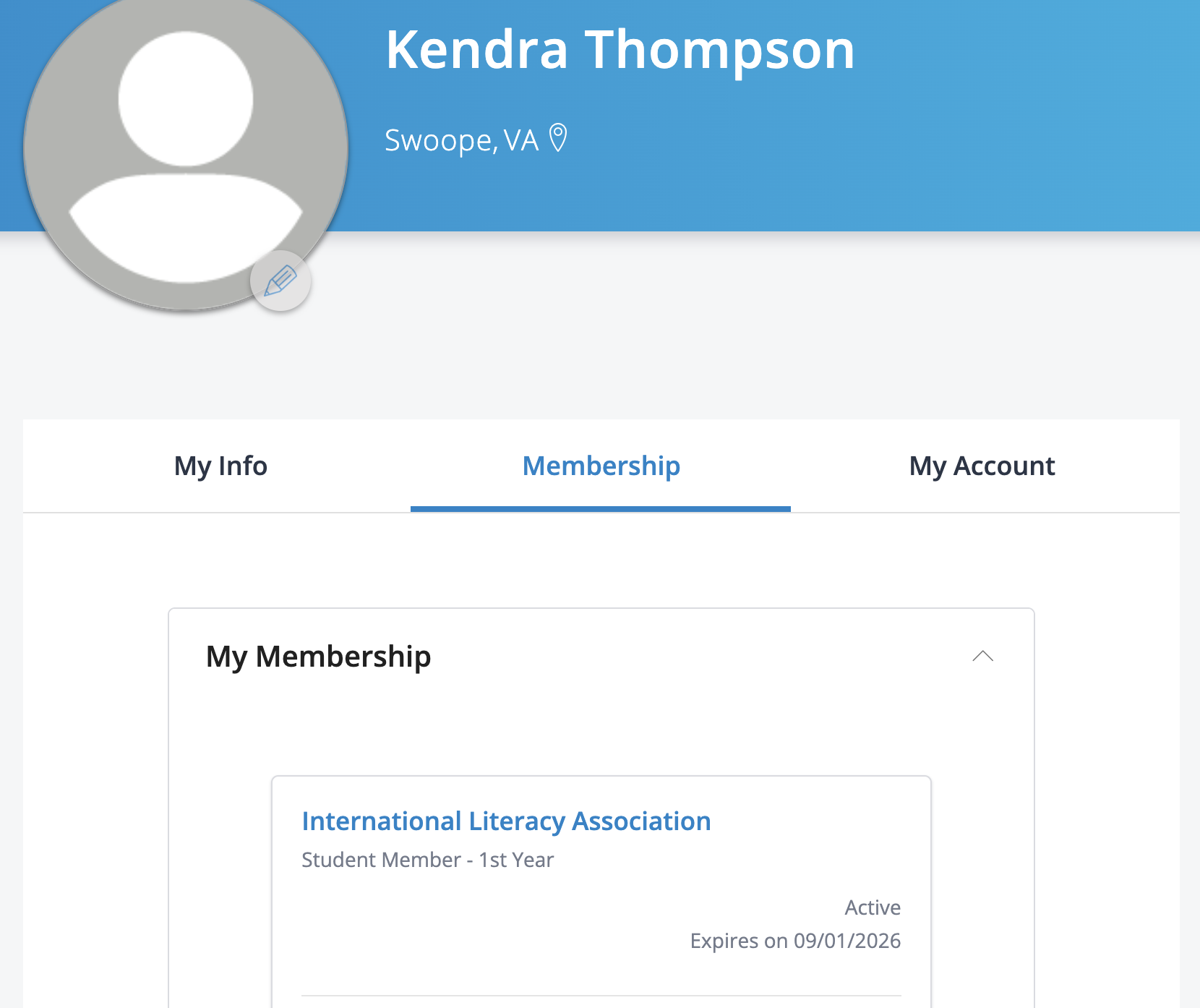
ILA Membership
ViewExam History
Discussion: Explain how your score compares to the cut score and the average score range of other test takers.
The passing score had to be 162 or more. I scored a 164. The average scores were 165- 178, so I was on the lower end. The breakdown scores show that I was above average in curriculum and instruction, but was below average in application. I took the PRAXIS before I had taken all of my courses, so I feel confident that I would score much higher now that I have had more hands-on experience.
Discussion: Explain how your score compares to the cut score and the average score range of other test takers.
The passing score had to be 162 or more. I scored a 164. The average scores were 165- 178, so I was on the lower end. The breakdown scores show that I was above average in curriculum and instruction, but was below average in application. I took the PRAXIS before I had taken all of my courses, so I feel confident that I would score much higher now that I have had more hands-on experience.